G’SOT: A Map to the Grapes
While writing this piece, I realized that the main focus of my writing so far is about, well, focus itself. But please bear with me; the thing is, every time I or a business I work with faces an issue or gets stuck, I realize that we have drifted away from what is important.
There’s a popular Arab proverb mostly known in the Eastern Mediterranean culture that says: Do you want to eat the grapes or fight the guard?
It is mostly used when someone loses sight of the original goal, mistakenly elevating a secondary activity (or worse, an unnecessary one) to primary importance. In other terms, it is when you let the tail wag the dog.
Weirdly enough, and without much thought, it became my guiding star. Every time I get distracted or fully overwhelmed with tasks, I ask myself: am I getting the grapes or focused on eliminating the guard?
If we’re talking business, this is when a company’s mission and vision statement come in handy. The problem there is that almost all companies I have worked with do not understand the importance of having those strategic statements. I often encounter statements that were written by a junior copywriter with no proper guidance, just to be included on the website, or now drafted without any intent through GPT. I would love to discuss this further another time. But going back to this, and beyond your vision, there come your business goals and objectives.
Being an old-school gal, my ultimate go-to is the G'SOT (Goals, Strategies, Objectives, Tactics) framework. It helps me keep my eyes on the vision and long-term goals, while breaking them into measurable and manageable small puzzle pieces. It helps me answer my every-time question, whether I’m deciding on or implementing a task: what does this help me achieve (or the capital why)? If my daily actions (or in this matter, a business’s) are not directly aligned to a high-level, long-term business (or even a personal) goal, then I, or the business, need to rethink that task.
Sometimes, it is not that clear to figure it out. This is where data and insights come in handy.
The First Clue to Finding Focus
Going back to the investigation metaphor, well, it is always an investigation, if you ask me (a major part of why I like what I do, with an imaginary Sherlock’s hat on my head :). Every investigation starts with a question.
The real challenge, of course, is asking the right ones. And to get there, you first need to map and analyze the data already in front of you. That’s where the digging begins. Only then can you start to see what’s missing and figure out what other pieces of information you need to build the whole picture.
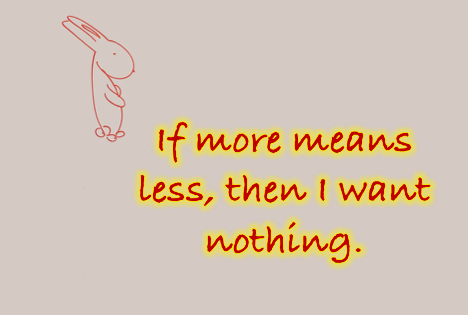
If more means less, by Sarah Ghanimeh
It usually starts with internal secondary data: the sales numbers, the audit reports, the financials. From there, you move to the people inside, the conversations with internal stakeholders who live the business day in and day out. Then the circle widens. You begin picking up clues from outsidestakeholders: partners, suppliers, retailers, distributors, and, most importantly, from the different customer groups themselves. A simple satisfaction survey can often reveal more than a dozen meetings around a boardroom table.
When we get dragged into the storm of day-to-day operations, we mostly get too narrow-focused thinking within the limits of the internal walls. Real insights emerge from talking to your outside world. It always baffled me that most SWOT analyses are the results of ideally a few half-days of staff brainstorming sessions put on the whiteboard of a meeting room or sometimes, the sole desk-top effort of one individual or department within the company. While SWOT is taken as a cognitive exercise, we mostly fail to understand its real power and put in all our strengths to properly, honestly, and accurately identify it, define it, and build strategic goals around it.
From here, the digging unfolds across four pillars: scanning the industry and sector from macro to micro, benchmarking and learning from success stories, analyzing competitors, understanding the target market: its psychographics, behaviors, attitudes, decision-making tree, and the barriers and promoters that shape it all, and finally, turning inward to make sense of the company’s own data.
The Natural (Strategic) Selection
This is where the work of defining the problem becomes real. It’s about building a full picture from every angle until patterns begin to emerge. Each piece of information, each conversation, each clue helps cut through the noise, strip away assumptions, and point you toward the core of the issue. That’s also the moment when the door opens to a series of possible actions and solutions. Informed by data, the focus stops being abstract and becomes tangible. Once you’ve dug deep enough to understand the problem, you can prioritize based on the market situation, your capacities, and your capabilities, and then make the strategic choice to concentrate on what will truly move the needle.

The Usual Suspects (1995), Bryan Singer
And it always starts here: with the question, the digging, and the courage to face the real problem before rushing into solutions. Because strategy, at its core, isn’t about piling on more. It’s about cutting through the noise, stripping things back, and choosing with intent. In the end, the real edge doesn't come from doing everything. It comes from daring to focus on less and doing it better.
So always ask yourself: am I putting all my energy into being able to eat the grapes, or did I get too focused on my plans to distract the guard that it became my goal? Unless you have the strategic clarity to befriend the guard so you can gain access to your goal. Well, that’s also a focused strategy..
